ONE VISIT, ONE HOUR, NON-SURGICAL TOOTH REPLACEMENT

  • In the US, only 14 million spaces are being replaced annually out of 72 million because of cost.
  • New Method: Bond-A-bridge™
  • Reduces Tooth Replacement time by 75% for crown and bridge
  • Reduces Tooth Replacement time by 90% in comparison to implants.
  • Non-surgical.

Introducing Bond-A-Bridge™ – a one visit, one hour system instead of 4- 8 visits over months used instead of C&B and implants when there are one or two missing teeth in the posterior mid-arch.

Reduce Patients Cost For Replacing Missing Teeth… a big driver for increasing new patients to your practice.

50% of the cost of traditional methods… a big driver for new patients, yet dentist does extremely well for one hours work.

FDA Approved  as a class-I device.


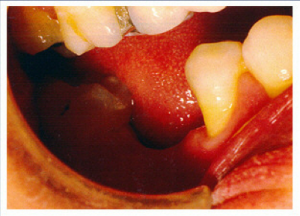
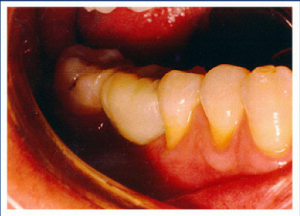
         Before: Bond-A-Bridge™                                          After: Bond-A-Bridge™


The Revolutionary Dental Breakthrough Behind Bond-A-Bridge™

The original idea in the 1980’s and 1990’s behind inlay bridges was minimum tooth preparation. There were 2 approaches: one approach used metal beams or rods upon which denture teeth or laboratory teeth are processed. The engineering problem at the time that was not understood by the dentist/clinician, if he had a failure, was why the end of the beam occasionally loosened in the cement which was holding it to that tooth. The reason was that the ends of those beams relied strictly on surface roughness for their adherence to the cement, and that was not enough. In addition, the cements themselves were nowhere near as strong as are current cements which fall into 2 classes: resin ionomers or self-etch adhesive cements. These were not available in the 80′s and 90′s. Most importantly, there was no way to eliminate torsion of the beam in the cement.

This has now been solved with an aerospace company, Polymer Technologies, who manufactures for Oro-Health International. Using a proprietary process in which they over mold a special polymer onto special steel (of the type that has been used in implants). They can control the physical characteristics of both the steel beam as well as get FUSION of the special polymer molecularly to the steel. Since a special polymer is of the same acrylic family as are luting cements, (with which the beam is cemented into the prepared teeth) the dentist is able to get complete fusion from the self-etch primer adhesive which bonds the tooth to the luting cement, and the luting cement, which in turn bonds to the  special polymer which itself is fused to the steel. In addition, special design improvements have been made in the shape of the tail to enhance surface area for attachment of the special polymer..

There is a fascinating relationship between the flexural strength and fracture toughness of any beam used between 2 teeth and its retention within the teeth. The greater the flexure of the beam, the less stress within the cemented portion of the tooth. On the other hand, the stiffer the beam, the more the stress within the tooth. When fiberglass bridges were attempted in the 90′s, most of them failed because they were relying too much on providing flexural strength, and the beam systems were not rigid enough, so many of them broke. The fractures occurred on the occlusal of the composite tooth because the composite did not have the same ability to flex (being more brittle) as the fiberglass beam. In addition, the upper portion of the fiberglass beam was not adequately strong in compressive strength even though its undersurface had good tensile strength.

Bond-A-Bridge™ uses a much stronger beam that is purposely stiffer than the fiberglass beams. The engineered design has thus achieved complete fusion where the beam is cemented into the tooth so as to give the necessary resistance to torsion. This is new and has never been done before. This invention is absolutely not a regurgitation of the prior simplistic attempts at inlay bridges.


Comments are closed.